First Use of Cooperative Anaesthesia on a Dhole Through Voluntary Training
hace 6 monthsThanks to this animal welfare approach, a clinical biopsy was performed on the animal without causing stress.
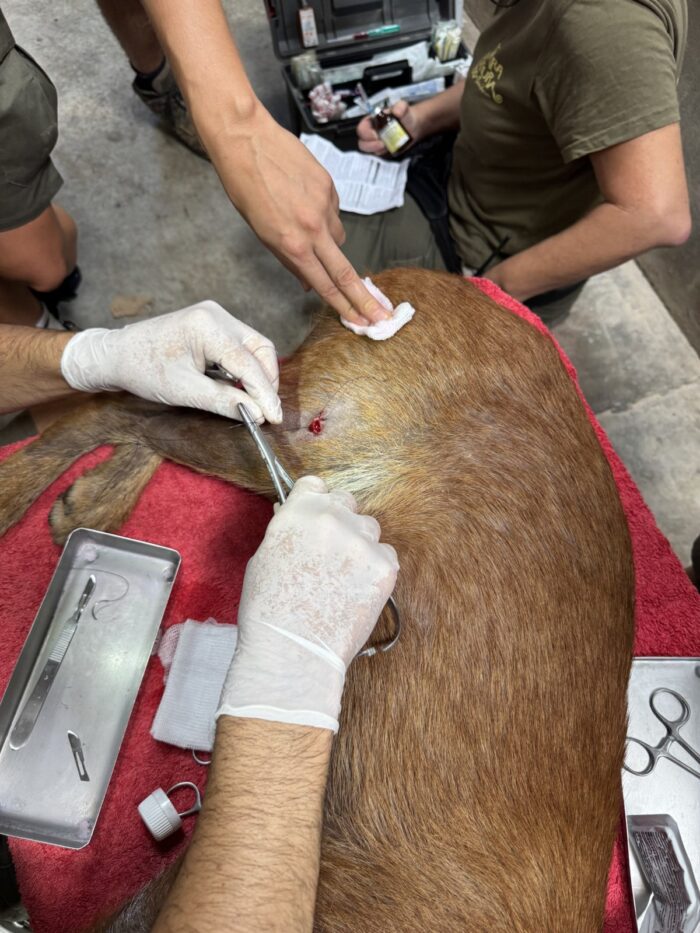
Our veterinary team has carried out a pioneering procedure on one of our dhole (Cuon alpinus) specimens, achieving for the first time voluntary cooperation from the animal in the administration of anaesthesia through a cooperative training method. Fray, a one-year-old male dhole, underwent this innovative technique to allow a biopsy aimed at identifying the causes of a persistent dermatological issue.
Fray presented with multifocal alopecia accompanied by pruritus that had not responded to conventional treatments over several weeks. To obtain an accurate diagnosis, the veterinarians conducted a skin biopsy alongside other diagnostic tests, including blood analysis, hair, and epithelial cell samples.
What made this intervention particularly significant was the use of a method based on the animal’s voluntary participation through positive reinforcement and visual and verbal cues. Thanks to this training system, Fray voluntarily accepted the intramuscular administration of anaesthesia, avoiding the need for darts or other invasive methods.
During the procedure, after administering the anaesthesia cooperatively, the team carried out a full health examination and collected various samples for laboratory analysis. As a precaution, an initial treatment was also administered to address potential causes of his skin lesions.
The dhole is an endangered species, rare in European zoos, and is the only canid capable of climbing trees. In Spain, Terra Natura Benidorm is home to this group of dholes.
Through this practice, we reaffirm our commitment to an advanced animal welfare model that actively involves animals in their own care, reducing stress and achieving better clinical outcomes. This biopsy, performed with cooperative anaesthesia, represents a significant step forward in the veterinary management of exotic species and in implementing innovative techniques that prioritise the health and well-being of animals under human care.