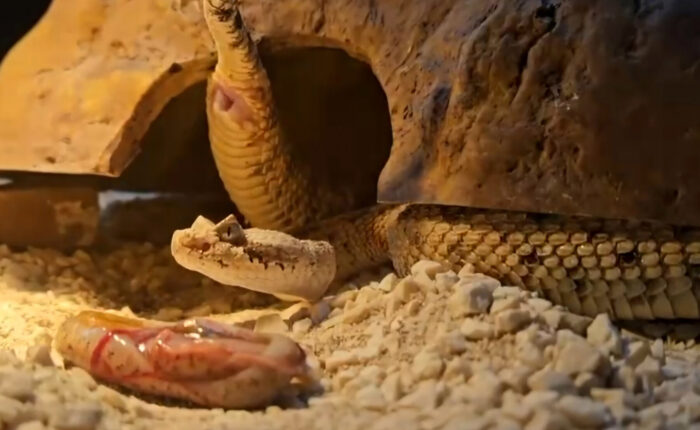
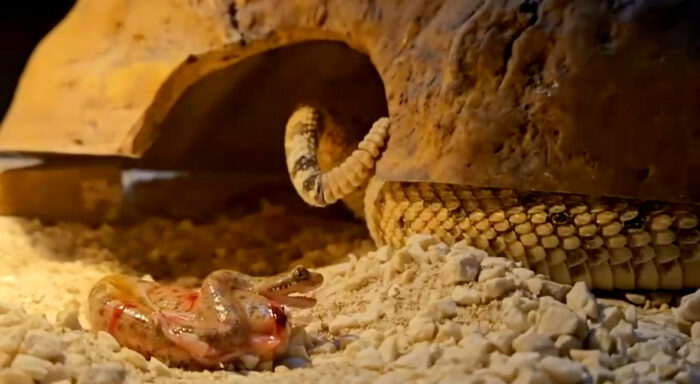
We welcome seven desert horned rattlesnakes at Terra Natura Benidorm
hace 8 monthsThe venom of this species is not lethal to humans when proper medical care is provided, and it is attracting scientific interest for its potential biomedical applications.
At Terra Natura Benidorm, we are celebrating a new milestone in our conservation programme with the birth of seven desert horned rattlesnake hatchlings (Crotalus cerastes), a species native to the arid regions of Central and North America. The birth follows several months of close monitoring and confirms the successful reproduction of the breeding pair housed at the park since 2011.
This species is viviparous, meaning the young are born fully formed and self-sufficient from the moment of birth. While litters of between 6 and 12 are common for this variety, the number of hatchlings is particularly remarkable given the advanced age of the parents. This event represents a significant achievement in our ongoing commitment to conserving and understanding unique animal families.
The reproductive process required a carefully planned strategy by our team of herpetologists. As solitary animals, males and females are kept separated throughout the year. However, taking advantage of a controlled temperature drop during January and February—a key condition to stimulate breeding—the female was introduced into the male’s enclosure to encourage courtship. During this first encounter, they mated for four hours. A second introduction one week later resulted in a second mating, lasting three hours. Following this, the female was kept in isolation throughout the seven-month gestation period until the recent birth—an extraordinary moment that our team was fortunate enough to capture on video, despite the challenges of recording such scenes in captivity.
The newborn snakes currently measure around 10 centimetres in length and already display the initial button of the rattle, which will develop with each successive shed to form the distinctive rings that produce their characteristic warning sound in adulthood. This mechanism serves not only as a defence strategy but also as a deterrent to potential predators, helping to avoid conflict.
Adult desert horned rattlesnakes typically reach lengths of 30 to 50 centimetres and primarily feed on small rodents, making them key players in maintaining balance within desert ecosystems. Their venom, which is haemotoxic, is not fatal to humans when treated appropriately, and is currently being studied for potential biomedical uses such as anticoagulants or regenerative medicine treatments.
Visitors can learn more about this and other fascinating species during our daily educational talks held inside the volcano exhibit. Here, our herpetologists share key insights into the biology, behaviour, and ecological roles of reptiles like the desert horned rattlesnake.