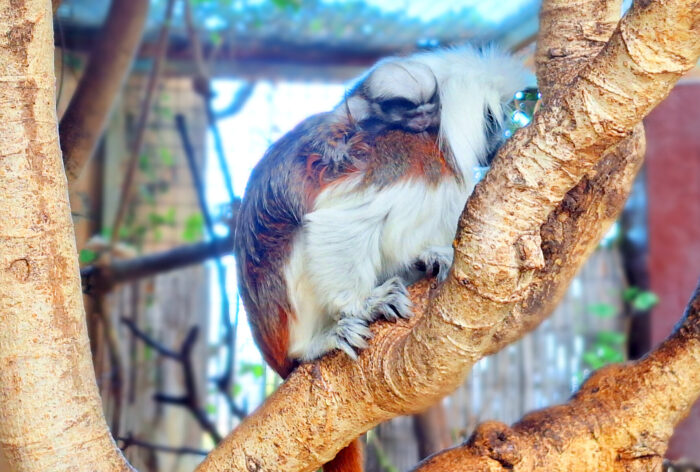
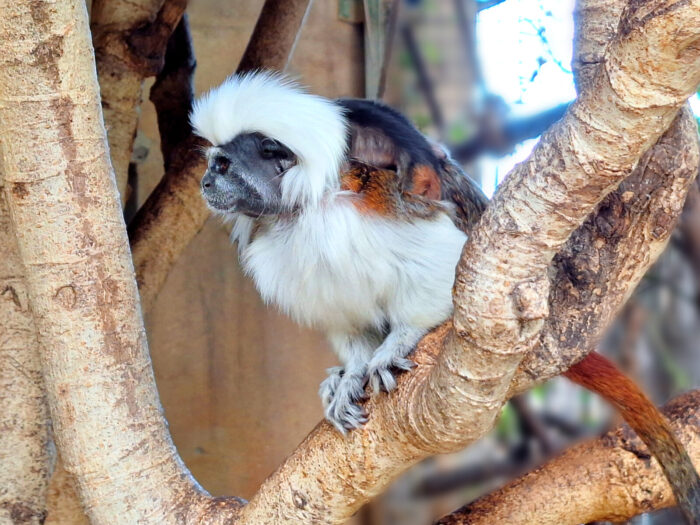
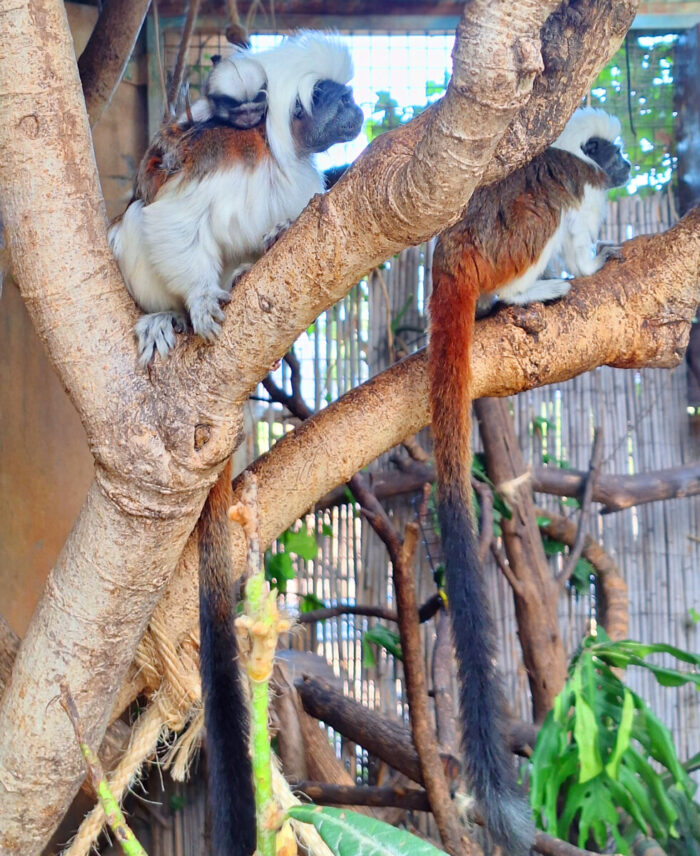
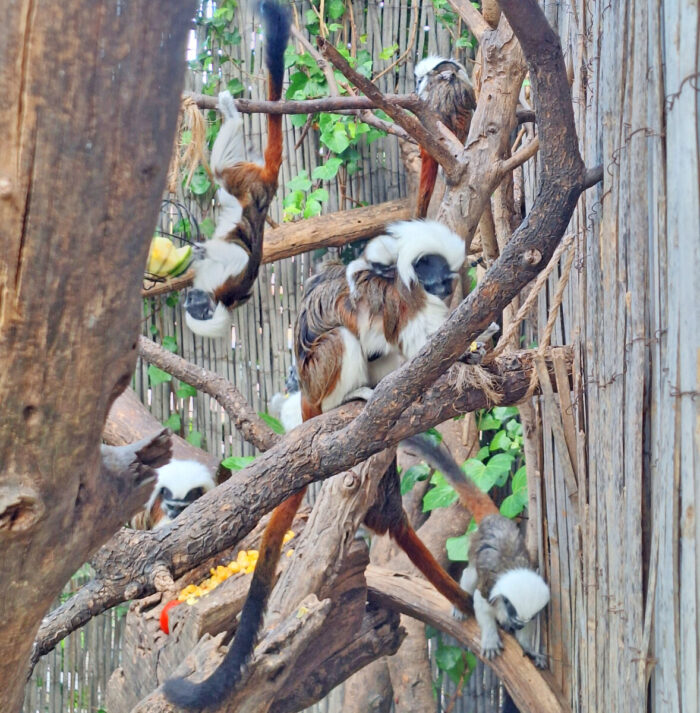
We welcome Two White-Fronted Marmoset babies at Terra Natura Benidorm, One of the World’s Most Endangered Primate Species
hace 3 monthsTerra Natura Benidorm is celebrating the birth of two white-fronted marmoset (Mico argentatus), one of the world’s most threatened primate species. The birth took place on 29th November and the parents, Martina and Basel, have successfully raised eight babies since they are together.
On this occasion, three babies were born but one did not survive the first days of life. The remaining two are in good health and are displaying behaviour entirely typical for their developmental stage. Newborn white-fronted marmosets weigh between 30 and 40 grams and rely completely on constant, direct contact with the adults in their group.
As is characteristic of the species, the babies are being carried by their parents and older siblings. When they need to feed, the mother retrieves them for nursing. Both Martina and Basel are demonstrating attentive, protective behaviours in line with what is normally observed in the species: the pair share the responsibility of carrying, caring for and monitoring their young, while also allowing the older siblings to take an active role in their daily care. For now, the two babies remain unnamed due to their young age.
Martina was born at Terra Natura in 2016 within another breeding group, while Basel arrived from Switzerland in 2021 to be a pair with her. This latest birth strengthens the group’s overall health and confirms the high level of welfare provided to the animals under the park’s professional care.
The white-fronted marmoset is classified as Critically Endangered by the International Union for Conservation of Nature (IUCN), the last category before extinction in the wild. Their populations are declining due to illegal pet trade, habitat loss and the effects of climate change. The species is endemic to forest and secondary woodland areas in Colombia, where family groups can reach up to 15 individuals, though they are usually smaller and include only one breeding female.
This birth contributes directly to the ex situ breeding programmes of the European Association of Zoos and Aquaria (EAZA), which aim to maintain stable, genetically diverse European populations to safeguard the species’ long-term viability. It also adds to other recent breeding successes at the park, such as the birth in September of a Goeldi’s marmoset (Callimico goeldii), listed as Vulnerable.
The park’s management and animal care team view these births as clear evidence of the excellent welfare conditions provided for the primates, as well as a key element of our ongoing commitment to the conservation of critically threatened species. For visitors, the arrival of these newborns represents a special chance to observe the biology and behaviour of these small New World primates, distinguished by their specialised claws and their natural propensity for multiple births.