SCHOOL VISITS
Dear teacher, we present the new education proposal 2025-2026.
During the months when the park is only open on weekends (check opening hours), school visits can exceptionally be booked as a free visit or guided tour.

Why visit the animal park?
Visiting the animal park is much more than just an excursion: it is an opportunity for students to discover the planet's biodiversity in a direct, fun and educational way. Through contact with animals from Asia and America, children develop values such as respect for nature, empathy towards other species and awareness of environmental conservation. A unique experience that complements classroom content and leaves a lasting impression.
Experiential Learning - Contact with Nature - Curriculum Support
Option 1: Free visit
Groups can explore the park at their own pace and enjoy the daily activities programmed for all visitors. Recommended for all ages.
Educational Talks on Animals
Information Stands and Exhibitions
Interactive Stations
Feeding and Training Observation
Birds of Prey Flight Demonstration
Multi-adventure Park and Zip Lines
Option 2: Guided tour with monitor + educational workshop
A more comprehensive proposal for a structured and dynamic experience.
Includes:
Accompaniment by a leisure and recreation monitor during the tour (1 monitor for every 20 students), from 10:30 a.m. to 2:00 p.m.
30-minute educational workshop led by an environmental educator, adapted to the educational level.
Option to continue the visit freely until the park closes.
Select your workshop:
🟡 The secret world of bees
Discover how bees live and why they are so important.
🟢 Fur, beak, claws. A thousand ways to live.
Identify the main groups of vertebrate animals.
🔵 How do we care for the animals at Terra Natura?
Learn how we ensure the welfare of our animals and care for them.
🟠 Learn to calculate your ecological footprint (ages 8 and up – 3rd year of primary school)
Reflect on your environmental impact with a participatory activity.
🟣 Who's who? Bird identification (ages 10 and up – 5th year of primary school)
Observe, compare and learn to recognise different birds.
Extra activity: Interaction with sea lions
You can add this experience to option 1 or 2.
Get up close to these special animals and learn about their biology and conservation.
15 min
Until 15 June
Typical itinerary for the guided tour
(Times are approximate and subject to change. Each group will follow a tailored route.)
Time Activity
10:30 Reception of visitors
11:00 Visit to the America Zone and World of Venom
12:00 Demonstration of birds of prey in flight
12:30 Educational workshop
13:00 Visit to the Asia Zone
14:00 Farewell
Basic information and rules
Accessibility and picnic areas
Coach parking
Teachers are responsible for their groups during their stay. They must accompany their pupils at all times.
The arrival time must be respected in order to comply with the itinerary. In the event of a delay, the end time will not be extended.
One the Health
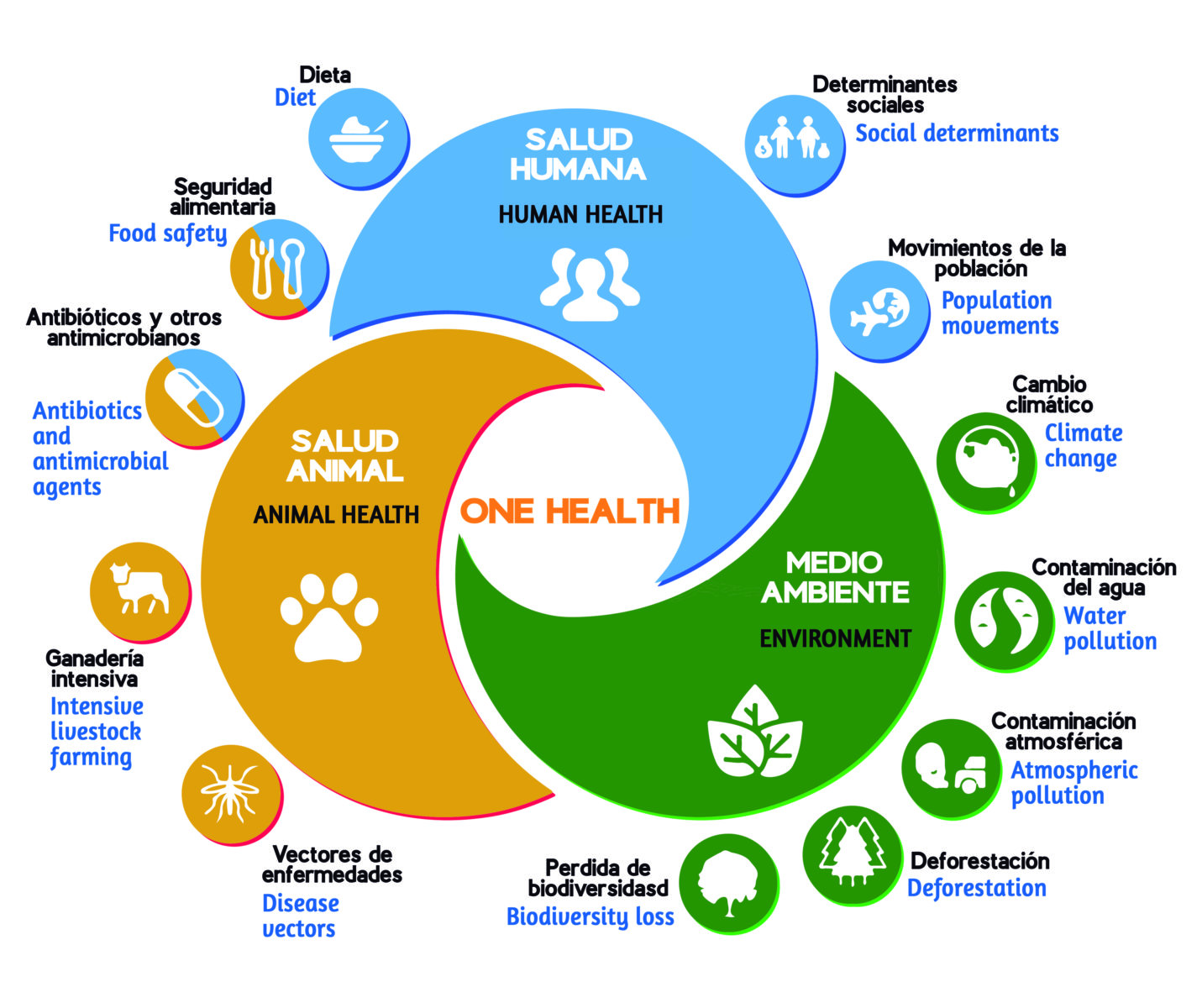
The ‘One Health’ approach promotes healthy and sustainable habits, following strategies in different fields shown in the scheme below.
We suggest that you become part of this network, sharing your own proposals for evolving towards a more sustainable and healthy life, improving the health of people, animals and the environment.
Do you want to become part of it?
Send us your proposals to info@terranatura.com A technicians committee will evaluate all contributions received during 2024 and will prepare the Terra Natura Benidorm One Health Agenda, a list of good practices that we will share past 2025 with all visitors.
Proposal 1: ‘Recycling at home is quite easy. We use three small bins for plastic, glass and cardboard. I have also stopped using plastic bags and bottles. At first I kept forgetting, but now I've got the hang of it and always take my cloth bag and reusable bottle with me everywhere I go.’
Committee response: Reducing the use of plastics and recycling properly prevents tonnes of waste from ending up in the sea or in nature, damaging wildlife and ecosystems. By making small changes in our daily lives, we help reduce pollution and protect wildlife.
Topic addressed: Recycling and reducing the use of plastics
Proposal 2: "I recently went to some workshops where we built little houses for bugs. I was surprised at how important they are for nature. Since then, I've been planting flowers in my garden to attract bees and butterflies.
Committee response: Protecting local biodiversity is key to ecological balance. Through our workshops, we help create shelters for essential species, such as bats and pollinating insects, which play a vital role in pest control and ecosystem regeneration.
Topic addressed: Caring for local biodiversity
Proposal 3: ‘I try not to waste a single drop of water. I turn off the tap while brushing my teeth and use the water I wash vegetables in to water my plants. These are simple things that cost nothing, but I think they add up and help make things a little better.’
Committee response: Every drop counts. Using water consciously helps to preserve water resources, which are essential for life on the planet. Small actions such as reducing shower time or using rainwater can make a difference in the conservation of aquatic and terrestrial ecosystems.
Topic addressed: Responsible water use
Proposal 4: ‘Last year I decided to install solar panels at home and I was amazed at how quickly it showed up on my electricity bill. I love knowing that, in addition to saving money, I'm helping the planet and polluting less. It's all good, ha ha ha.’
Committee response: The transition to renewable energy not only reduces carbon footprints, but also improves air quality and lessens the impact of climate change on ecosystems. Investing in clean energy sources such as solar and wind power is one of the most effective ways to protect the planet.
Topic addressed: Renewable energy
Proposal 5: ‘The truth is that I used to take the car even to go to the corner shop, but now I try to walk more or take my bike. I get more exercise, which is great for me, and I think I pollute less. It's a small change, but I feel like I'm doing my part.’
Committee response: Using sustainable transport such as bicycles or public transport helps reduce air and noise pollution, improving the quality of life in cities and protecting natural habitats.
Topic addressed: Sustainable travel
Proposal 6: "I always try to buy seasonal produce from local farmers at the market. They taste much better and I'm also helping the people who work in the area. I avoid food that has to be transported from far away, which ultimately causes a lot of pollution."
Committee response: Choosing local products reduces your carbon footprint and encourages more sustainable agricultural practices. In addition, protecting agricultural biodiversity and pollinators is key to ensuring long-term food production.
Topic addressed: Responsible purchasing
Proposal 7: ‘At home, we are learning how to care for the environment. We really enjoy going to the workshops and stands you set up, because not only do the kids become more aware, but we are also learning a lot of new things.’
Committee response: Environmental education is key to building a more sustainable future. Through our talks and workshops, we teach children and adults about conservation and sustainability, promoting responsible habits that are passed down from generation to generation.
Topic addressed: Environmental education
Proposal 8: ‘Taking antibiotics unnecessarily can affect nature, which is why they should not be thrown away anywhere. I try to use them wisely and, when I no longer need them or they have expired, I take them to the right place.’
Committee response: The misuse of medicines, especially antibiotics, contributes to bacterial resistance and pollutes aquatic ecosystems. Throwing them in the bin or down the drain can affect wildlife and alter the natural balance of water. That is why it is essential to use them responsibly and dispose of them at the appropriate points.
Topic addressed: Conscious consumption of medicines.
Education is a commitment to society and to the future of our planet.
Terra Natura Benidorm is a fun and safe teaching moment for your students. It is a great educational resource for transmitting to children and young people a message of respect and protection for Nature.
Are you interested?
Then call us at 96 607 27 70, or fill in this contact form with your information. We will respond just as soon as we can.

