An eye examination for an Indian rhino: a challenge for our veterinary team
hace 3 daysWe are using positive reinforcement techniques with Nisha to encourage her cooperation during an ophthalmic examination, following concerns about possible vision difficulties.
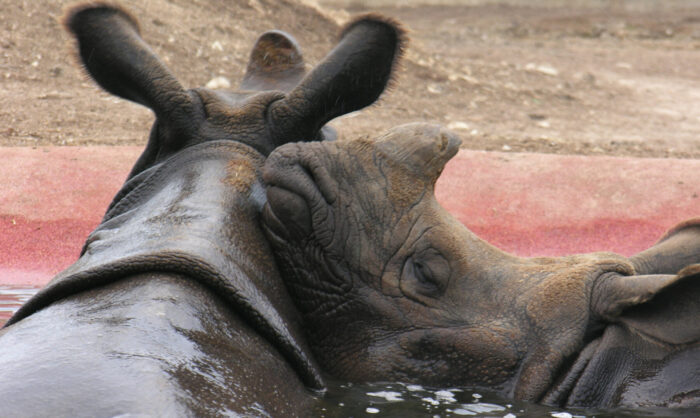
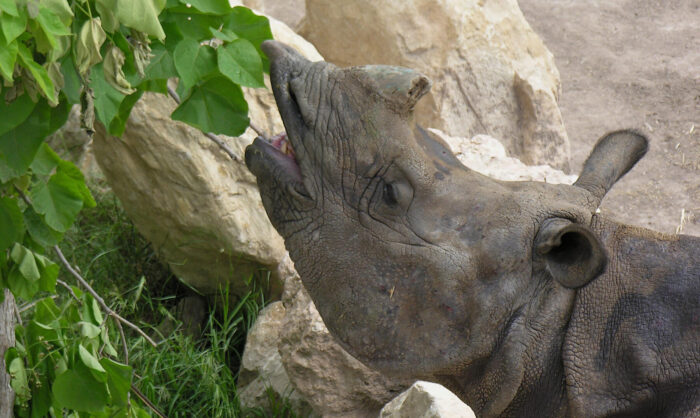
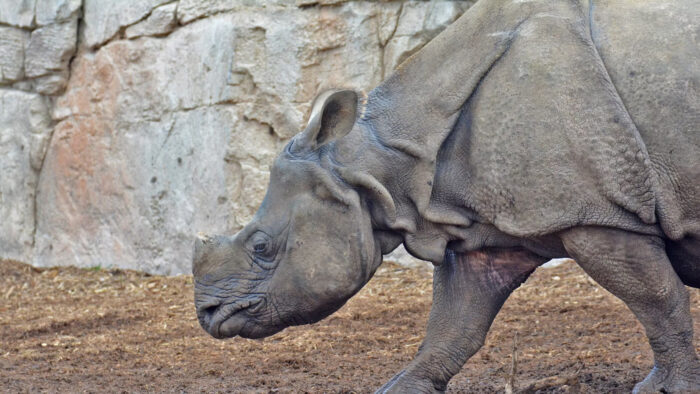
Over the past few weeks, our team at Terra Natura Benidorm has been facing a veterinary challenge: carrying out an eye examination on Nisha, a female Indian rhinoceros (Rhinoceros unicornis), without causing her any stress.
Following concerns that she may be experiencing difficulties with her vision, we have been working alongside her keepers on a training programme based on positive reinforcement. The aim is to help Nisha become familiar with the different stages of the examination and to encourage her to participate voluntarily, while respecting her pace and individual needs.
Nisha is part of the European conservation and breeding programme for this threatened species. Monitoring her health and welfare is therefore an essential part of the work we carry out at our park. To prepare for the veterinary examination, we have developed a training process tailored to her needs and behaviour.
Throughout these sessions, we use positive reinforcement to encourage and reward specific behaviours. Our goal is for Nisha to learn to position her head in a particular way, remain calm for short periods and become comfortable with gentle contact from our team around her eyes.
This process requires patience and consistency, particularly as the examination involves a sensitive area of her body. We therefore introduce each exercise gradually, allowing her time to learn and adapting every session to how she responds. This approach helps Nisha become progressively more comfortable with the procedure and enables her to take part in the examination without having to force her movements.
As well as making veterinary care easier, this type of training helps strengthen the bond of trust between our keepers and the animals in their care. Becoming familiar with certain healthcare procedures encourages animals to participate more calmly in routine check-ups and allows us to use handling techniques tailored to their individual characteristics and needs.
Once Nisha is comfortable cooperating with each stage of the procedure, our veterinary team will be able to carry out a full ophthalmic examination, including the application of eye drops, an ultrasound scan and a detailed assessment of her eyeball. These tests will allow us to examine the structures of her eye and gather the information needed to determine whether any abnormalities could be affecting her vision.
For now, we continue to work through the training sessions step by step, and the examination will depend on how Nisha progresses. This process highlights our commitment to adapting veterinary procedures to each animal’s behaviour and to using trust-based, positive reinforcement techniques to ensure their wellbeing.