Terra Natura Benidorm Confirms September-Born Two-Toed Sloth Is Female
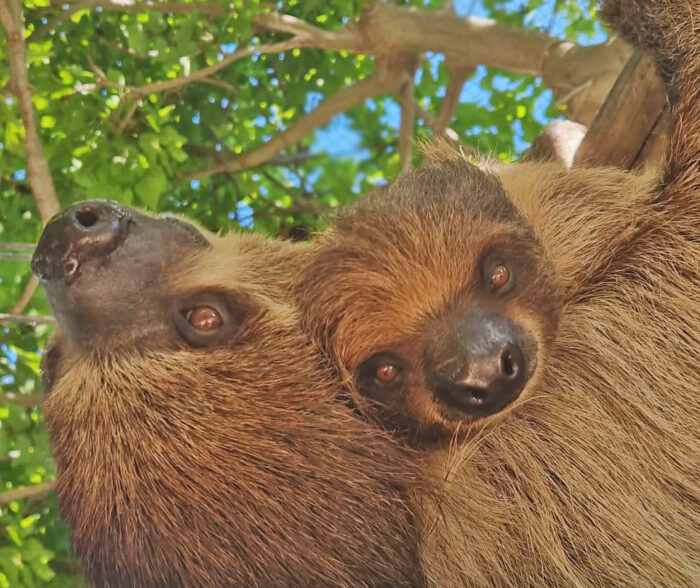
hace 4 monthsTerra Natura Benidorm has confirmed that the two-toed sloth (Choloepus didactylus) born at the park on 26th September is a female. The result was recently established through molecular sexing carried out during a routine veterinary health check. The young sloth, named Shibú, is developing well and is progressing exactly as expected for her species.
Shibú’s birth marked an important milestone for the park, reflecting Terra Natura Benidorm’s ongoing commitment to wildlife conservation and its participation in the European Endangered Species Programme (EEP). She was named after a deity from the Indigenous peoples of the Americas, symbolising life and respect for nature.
Shibú is the offspring of Pere and Charlie, the park’s breeding pair of two-toed sloths, both of whom are part of the EEP. Pere, now six and a half years old, arrived at Terra Natura Benidorm in 2021 from the Biodomo at Granada’s science park, while Charlie joined in 2023 from Tierwelt Herberstein in Austria.
Following a gestation period of more than ten months, Charlie gave birth while hanging from tree branches, just as two-toed sloths do in the wild. Since then, mother and daughter are keeping a close bond. Although Shibú is becoming increasingly curious about her surroundings and is beginning to show greater independence, she still spends most of her time alongside her mother, who plays a vital role in her care and development. As is typical for this species, the male does not take part in rearing the young.
Over her first few months, the park’s animal care and veterinary teams have observed steady growth in both her size and weight. While she continues to nurse, Shibú has also gradually begun exploring solid foods, always under Charlie’s close supervision.
The park’s specialists report that Shibú is in excellent health and displaying all the natural behaviours expected of a young two-toed sloth. Her wellbeing is monitored through regular observations of her body condition, behaviour, activity levels and adaptation to her
environment. Apart from routine veterinary examinations, no human intervention has been required in her upbringing. During one of these health checks, Shibú was fitted with a microchip for identification purposes, while the genetic analysis used to determine her sex was necessary because external genital characteristics in this species are extremely difficult to assess accurately.
Shibú remains naturally cautious around her keepers, a behaviour considered entirely normal for a species known for its quiet and elusive nature. Like other two-toed sloths, she is most active at dawn and dusk, when she spends her time climbing, exploring and feeding.
She lives alongside her mother in a specially designed habitat recreating the conditions of the Amazon rainforest, with temperaturas around 25°C and humidity levels above 75%. The facility has been carefully designed to support the animals’ welfare and is also home to a variety of tropical birds, insects and small primates within a controlled environment.
The two-toed sloth is an arboreal mammal renowned for its slow-paced lifestyle. Its exceptionally low metabolic rate and leaf-based diet enable it to conserve energy while remaining largely undetected by predators. Its fur also supports a unique micro-ecosystem, providing a habitat for algae, fungi and small invertebrates that depend on it for survival.
Shibú’s birth represents another significant contribution to the conservation of the two-toed sloth through the European Endangered Species Programme. Although the species is currently classified as Least Concern by the International Union for Conservation of Nature (IUCN), wild populations face increasing pressure from habitat loss and fragmentation, deforestation, illegal hunting and the wildlife trade. In this context, successful births within the EEP are essential for maintaining genetically diverse and demographically sustainable populations under human care, while also advancing scientific knowledge of the species’ biology and behaviour and helping to raise public awareness of the importance of protecting tropical ecosystems.